Home / Jumping Trainer
PLYOMETRICS
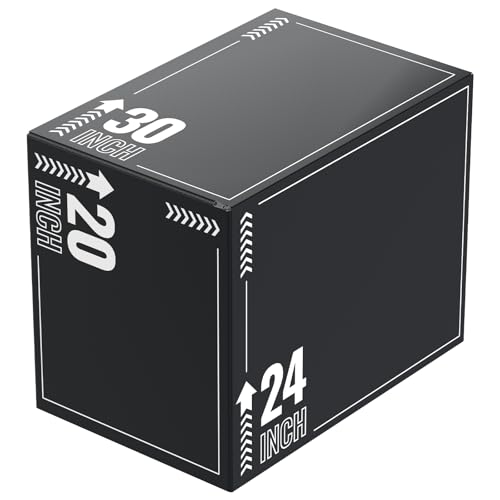
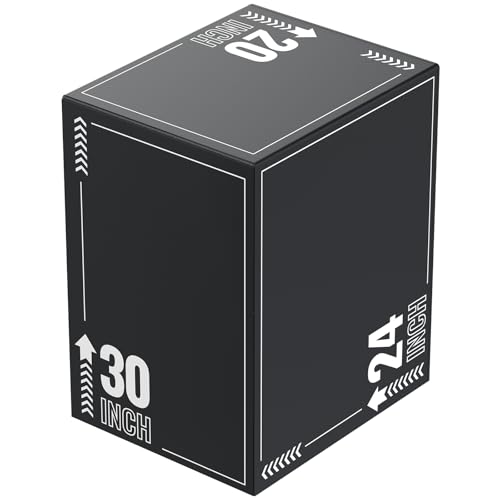
A high-density foam core wrapped in a non-slip, impact-resistant shell, with a 3-in-1 design that rotates between three heights — so beginners and advanced athletes can train explosive power on the same box.
PLIOMETRÍA
PLYOMÉTRIE
PLYOMETRIE
PLIOMETRIA
PLYOMETRIE
THREE HEIGHTS, ONE BOX
Every box in this lineup uses the same 3-in-1 idea: rotate the foam box onto a different side to switch heights instead of owning three separate boxes. What changes between listings is the exact height range and how much weight the box supports.
CORE
A dense foam core keeps the box light enough to move around the gym while staying rigid under repeated jumps.
SURFACE
The outer shell resists scuffing from shoe soles and keeps grip secure on the landing surface.
HEIGHTS
Most boxes rotate between 20", 24" and 30"; a compact version offers 12", 14" and 16" for lower-impact training.
CAPACITY
Box weight ranges from 16 lb to 66 lb depending on the model, with support capacity reaching 350 lb on most listings.
SEE IT IN ACTION
SHOP THE LINEUP
9 models, from a compact low-impact box to a heavy-duty 3-in-1.
SIDE BY SIDE
Height range, box weight and support capacity at a glance.
| Model | Heights | Box Weight | Support Capacity | ||
|---|---|---|---|---|---|
![]() |
3-in-1 Plyo Box, Light | 20" / 24" / 30" | 16 lb | 350 lb | View → |
![]() |
3-in-1 Plyo Box, Heavy Duty | 20" / 24" / 30" | 66 lb | Not listed | View → |
![]() |
3-in-1 Plyo Box, Standard | 20" / 24" / 30" | Not listed | Not listed | View → |
![]() |
Compact 3-in-1, Low-Impact | 12" / 14" / 16" | Not listed | Not listed | View → |
![]() |
Fixed-Size Box | 16" x 18" x 20" (fixed) | 29 lb | 330 lb | View → |
![]() |
3-in-1 Plyo Box, Non-Slip | 20" / 24" / 30" | 16 lb | 350 lb | View → |
BEFORE YOU BUY
The box is a triangular prism, not a cube — each of its three rectangular faces is a different height. Rotate it onto a different face to land on a new height instead of needing three separate boxes.
The compact version suits beginners, lower-impact training, or step-up work where a 20"+ box is too high to start. Most general box jump training uses the standard 20"/24"/30" range.
It comes down to foam density and shell construction — heavier boxes generally use denser foam for a firmer landing feel, while lighter boxes prioritize easy carrying and storage. Check the support capacity rating rather than assuming heavier always means sturdier.
Yes, by design — it only offers one height (16"x18"x20" depending on which face it's set on) rather than rotating between three. It can suit someone who already knows their preferred height and doesn't need the flexibility.
It's the rated weight limit for someone standing or landing on the box, which matters more here than with static furniture since box jumps add real impact force beyond your static body weight.